
• Increase the level of relaxation.
• Increase the good endorphins.
• Reduces the pain levels during stretching.
• Releases adhesions in the joint capsule and other connective tissue.
• Improves muscle activation and relaxation
• Manipulates, lengthens, realigns and reorganizes your fascia
• Improves flexibility on the first session and becomes cumulative with multiple sessions
• Increases joint space
• Eliminates trigger points
• Improves circulation
• Eliminates tight muscles and stiff joints
• We lose 10% of our range of motion every ten years we age, unless we take an active role in maintaining or improving our flexibility.
• 47% of your flexibility is locked up in your joint capsule.
• 42% of your flexibility potential is in your fascia.
• Many factors affect flexibility such as: age, dehydration, adhesions, lack of elastically connective tissues in muscle or joints, muscle tension, gender, hormones, length of ligaments or joints, lack of coordination and strength in case of active movement, inflammation, pain, fear, body mass, temperature, medication, training, vocation, postural misalignments, repetitive movements and more.
• Flexibility does not exist as a general physical characteristic, but it is joint specific and joint action.
• Real gains in flexibility will occur when you actually train flexibility on a regular basis.
• Flexibility must be balanced with strength to be fully functional.
• Assisted stretching is a relatively new and growing wellness industry that is recently being validated by medical science as its importance for flexibility as to overall health.

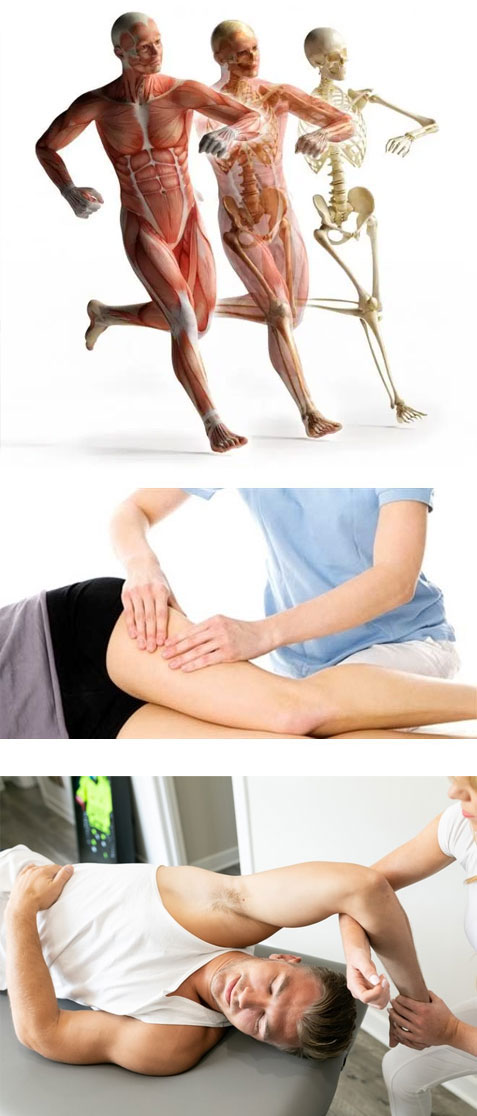
• Fascia is connective tissue that surrounds muscles, groups of muscles, blood vessel, and nerves
• Fascia binds some structures while allowing others to slide smoothly over each other
• Fascia reduces friction to minimize the force put on muscles – that is, it can be thought of as coating muscle for smoother movement.
• Fascia can be very elastic ( such as the skin covering your elbow) to allow appropriate stretching of skin over a joint.
•The fascial system is often under recognized and ignored. However, research is showing improved long-term effects of proper stretching recognizes that the fascia: Provides muscles with an environment where they can smoothly move, Transmit movements from muscles to bones, Acts as supportive blanket for nerves and blood vessels as they pass though and between muscles.
• Impaired mobility, over exertion, and stiffness can cause muscles and connective tissue to “stick” to one another. When structures stick to one another, they reduce the proper flow of blood and increase compression on nerves. Therefore, muscles lack proper circulation and nutrition causing an increased sensation of tightness.
• SST combines muscle with fascia stretching
• Muscles need to be relaxed before the fascia can be stretched and to release chronic holdings.
• SST can release chemicals known as endorphins that act as natural pain suppressants.
• SST can promote optimize the learning, practice, and performance of many types of skilled movements.
• SST can promote development of body awareness.
• SST can reduce the risk of injury especially sprains and strains.
• SST can increase balance and symmetry of the body.
• SST can reduce or eliminate back problems and pain.
• SST can reduce muscular soreness.
• SST can reduce muscular tension.
• SST can improve posture and muscle function allowing you to move your body more freely.
• Less muscle pain allows you to finally enjoy a life of quality.
• Restoration of normal joint space is anti-aging at its best youthful movement without pain!

Clients we have treated with SST include those with the following history and diagnoses:
Sport/musculoskeletal ailments such as:
• Shoulders impingements
• Hamstring and Quadriceps shortening
• Hip Flexor restrictions from capsular locking
• Gluteal tightness from strenuous running
• Low back pain
• Stiff claves from immobility and constant active usage
Neurological Conditions:
• Stroke
• Spinal Cord Injuries
• Multiple Sclerosis
• Parkinson’s Disease
Motor Vehicle Collisions:
• Acute or Chronic
• Recovering from surgery/injury
• Overuse and repetitive injuries
• Work related conditions
• Sports related conditions